Mission 4: Fast Data Transformation
Estimated time: 10 minutes
Learning Objective
Previously, you learned how to export a Flow to reuse your transformation pipeline. In this mission, you will discover the fastest way to apply these transformations, streamlining your workflow and maximizing efficiency.
Prerequisites
Required
It is necessary that you complete Mission 3 before starting this mission. We need the Flow you created in that mission.
Please refer to the Navigation Guide to familiarize yourself with the platform interface.
Step-by-Step Instructions
1. Publish Your Flow
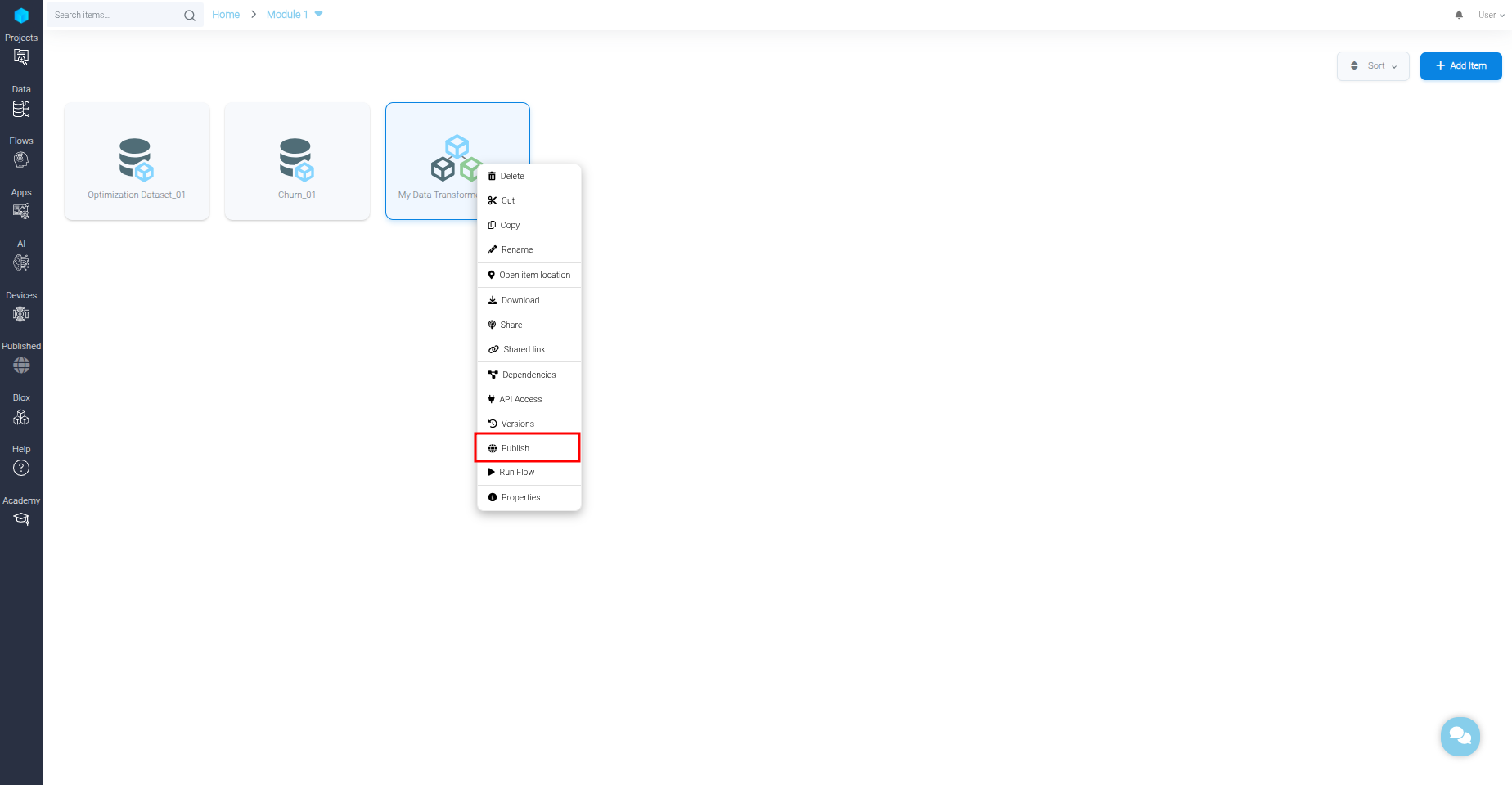
Navigate to the "Module 1" folder in the Projects Manager. Right-click the Flow you created in Mission 3 and select "Publish" to make it available for automation.
2. Locate the Flow Automation Feature
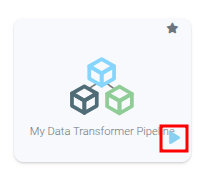
You'll see a Play icon button appear below your Flow. Click this icon to launch the Flow Automation window.
3. Upload Your Dataset
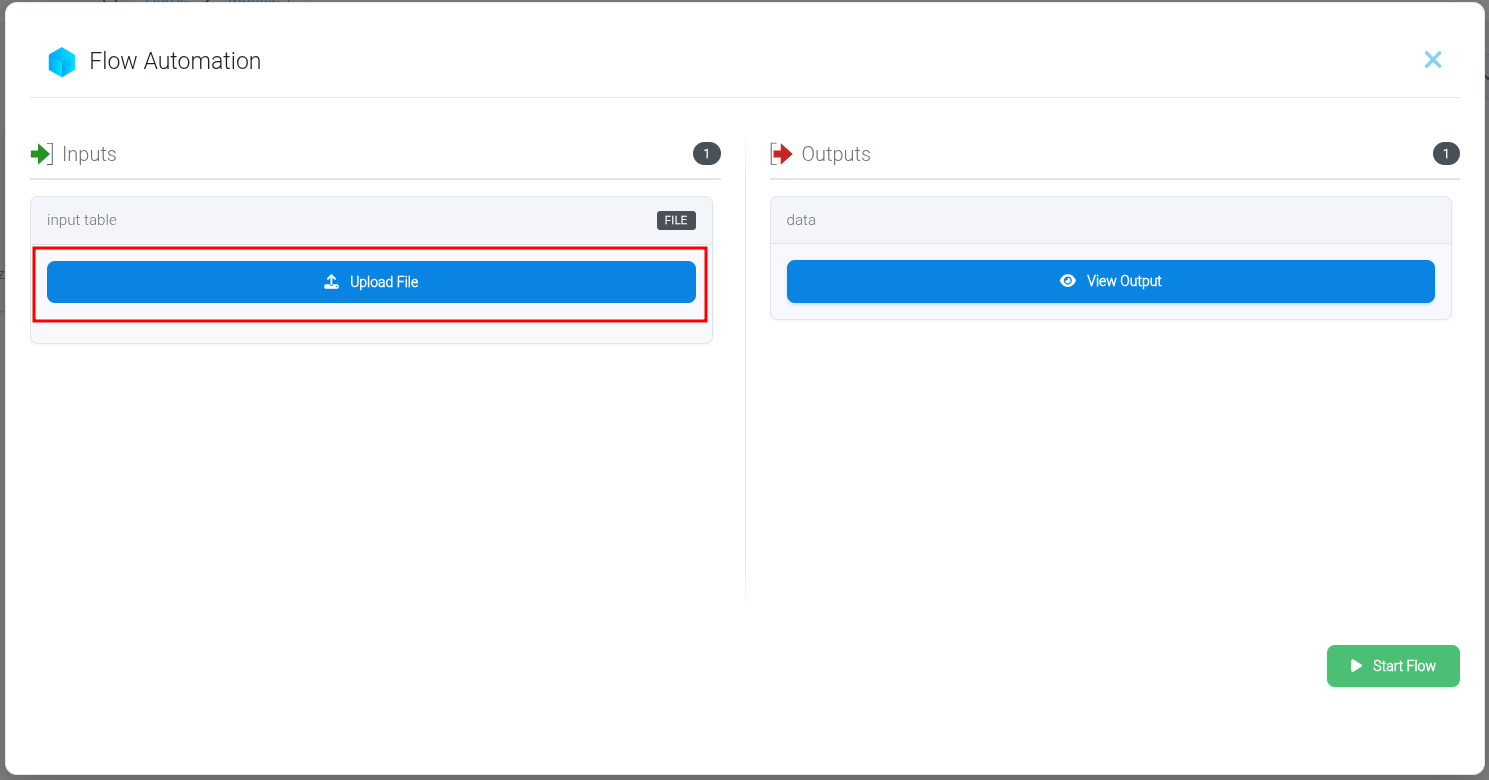
In the Flow Automation window, upload any compatible dataset by clicking the upload button. The dataset structure should match the original Churn dataset format for the transformations to work correctly.
4. View Transformation Results
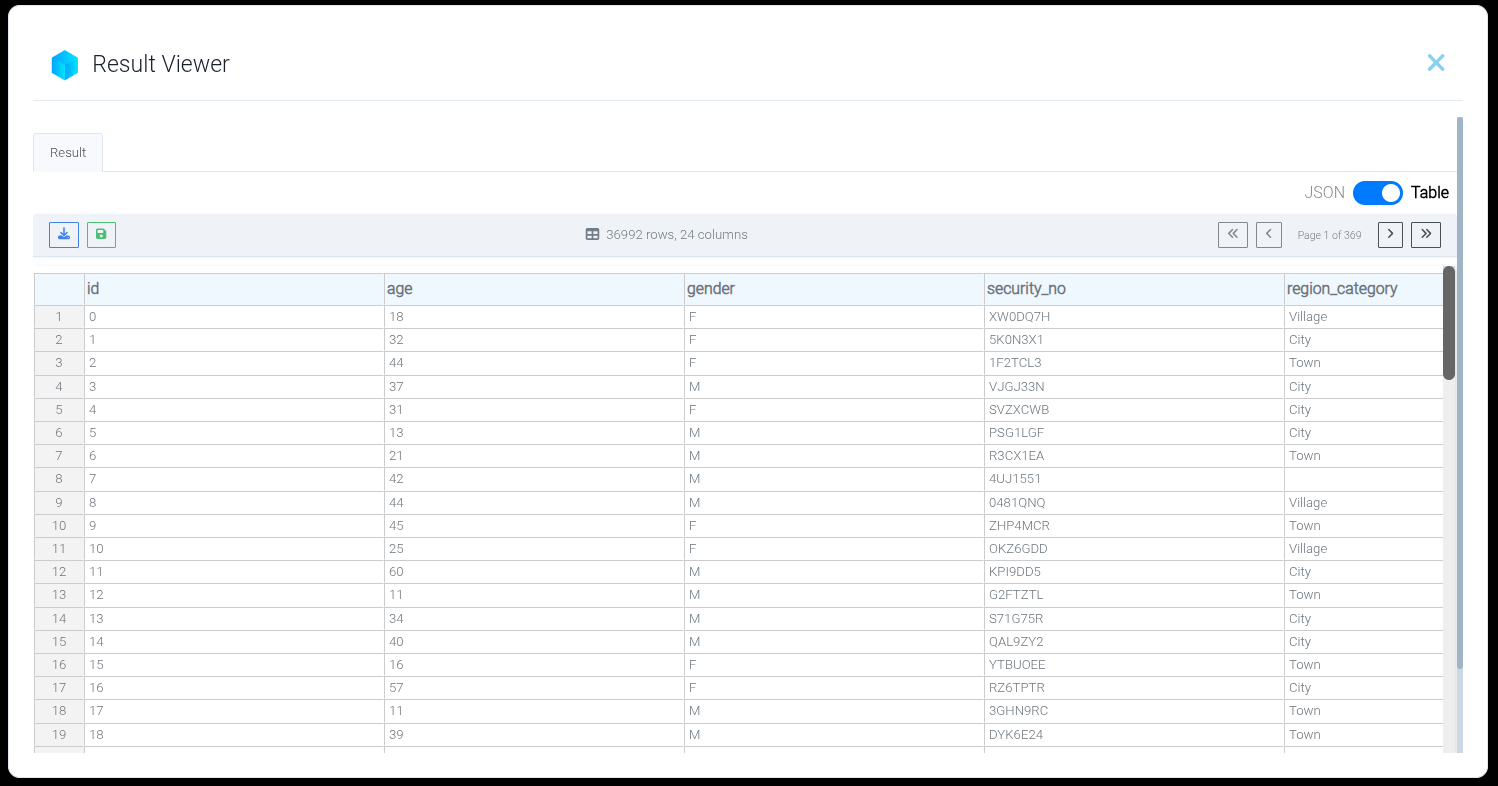
The Flow will automatically apply all transformation steps from your pipeline. View the transformed data with all AI-driven transformations applied instantly.
5. Download or Use Results
Once the transformation is complete, you can download the results as a file or use them directly in your project for further analysis.
Visual Guide
Step 1: Publish Flow
Step 2: Locate Play Icon
Step 3: Upload Dataset
Step 4: View Transformation Results
How Flow Automation Works
- Upload Dataset - Drag and drop or select any compatible dataset
- Automatic Processing - The Flow applies all transformation steps sequentially
- Instant Results - Get your transformed data immediately
- Download or Save - Export the results for use in other projects
Benefits of Flow Automation
- Speed - Apply complex transformations instantly with one click
- Consistency - Same transformations applied every time
- No Coding - No need to recreate pipelines or write code
- Batch Processing - Process multiple datasets with the same logic
- Error Reduction - Eliminate manual transformation errors
Use Cases
| Scenario | Benefit |
|---|---|
| Daily Data Updates | Quickly transform new data using established pipelines |
| Standardization | Ensure all datasets follow the same format |
| Team Collaboration | Share automation Flows with colleagues |
| Quality Control | Apply consistent cleansing rules across datasets |
| Rapid Prototyping | Test transformations on different data sources |
Summary
You've successfully learned how to:
✓ Publish Flows to make them available for automation
✓ Locate the Flow Automation feature using the Play icon
✓ Upload datasets for instant transformation
✓ Apply complex pipelines with a single click
✓ Download and use transformed results
✓ Maximize efficiency in data workflows
✓ Understand the power of reusable transformation Flows
Congratulations!
You've completed all missions in Module 1: AI Data Transformer. You now have the skills to create, cleanse, export, and automate data transformation pipelines using AI-powered tools.