Mission 1: Create Data Pipelines
Estimated time: 10 minutes
Learning Objective
Learn how to create your first data transformation pipeline with LOGIBLOX. In this mission, you will import a dataset and perform a series of actions to transform and edit the data. By the end of this exercise, you will have a solid understanding of how to build and manage data pipelines efficiently, setting the foundation for automating complex workflows.
Dataset
Download the required dataset: Optimization Dataset.xlsx
Prerequisites
Please refer to the Navigation Guide to familiarize yourself with the platform interface before starting this mission.
Step-by-Step Instructions
1. Create a New Project
In the smart desktop, click Create Project and name it "Module 1" in the dialog.
2. Navigate to Your Project
Open the "Module 1" folder and click on the "Add Item" button.
3. Import the Dataset
- Select Add Data option
- Click on Excel
- Add the Optimization Dataset
4. Open the Data Transformer
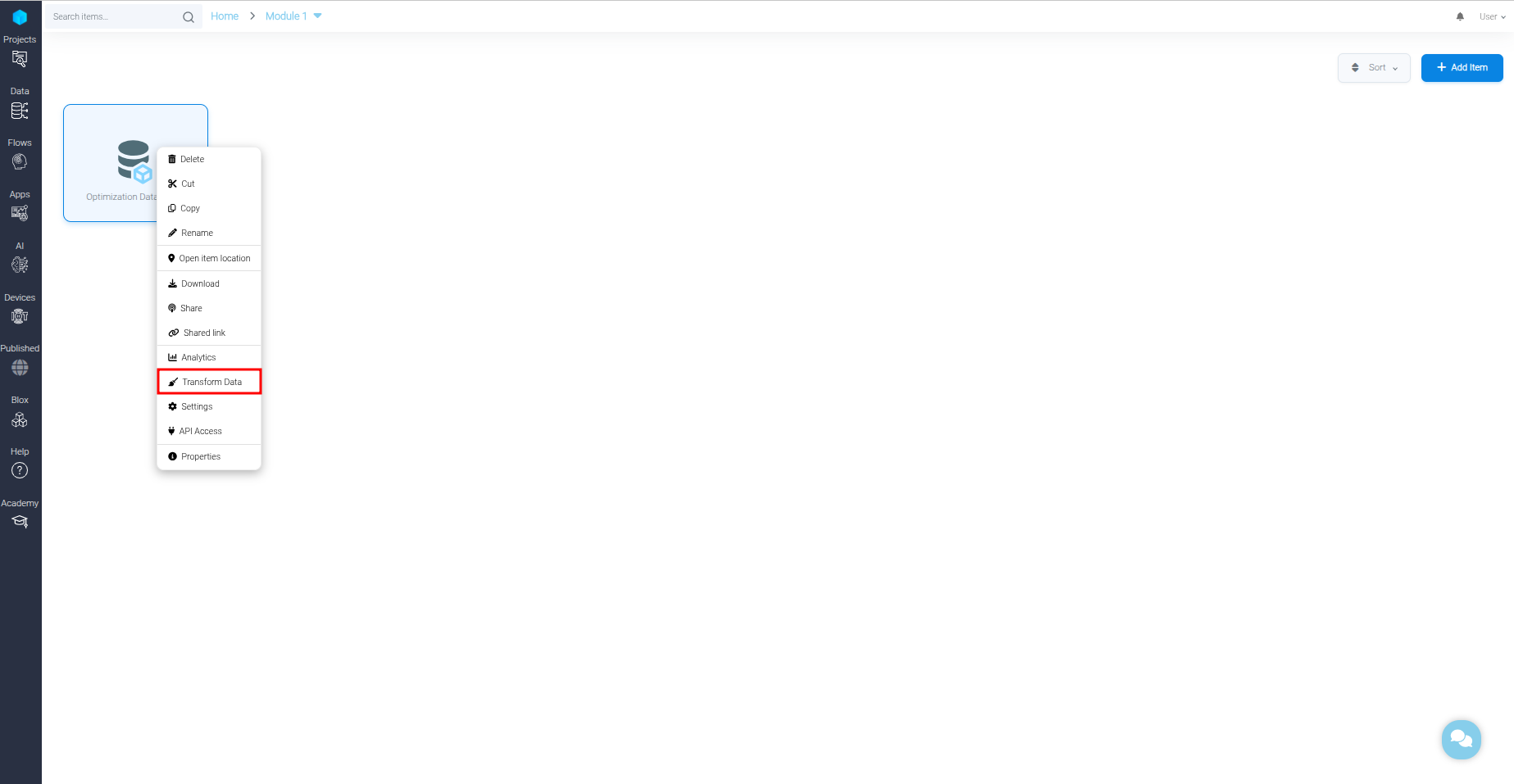
Right-click the dataset and select Transform Data. You can now write natural language commands to edit the data.
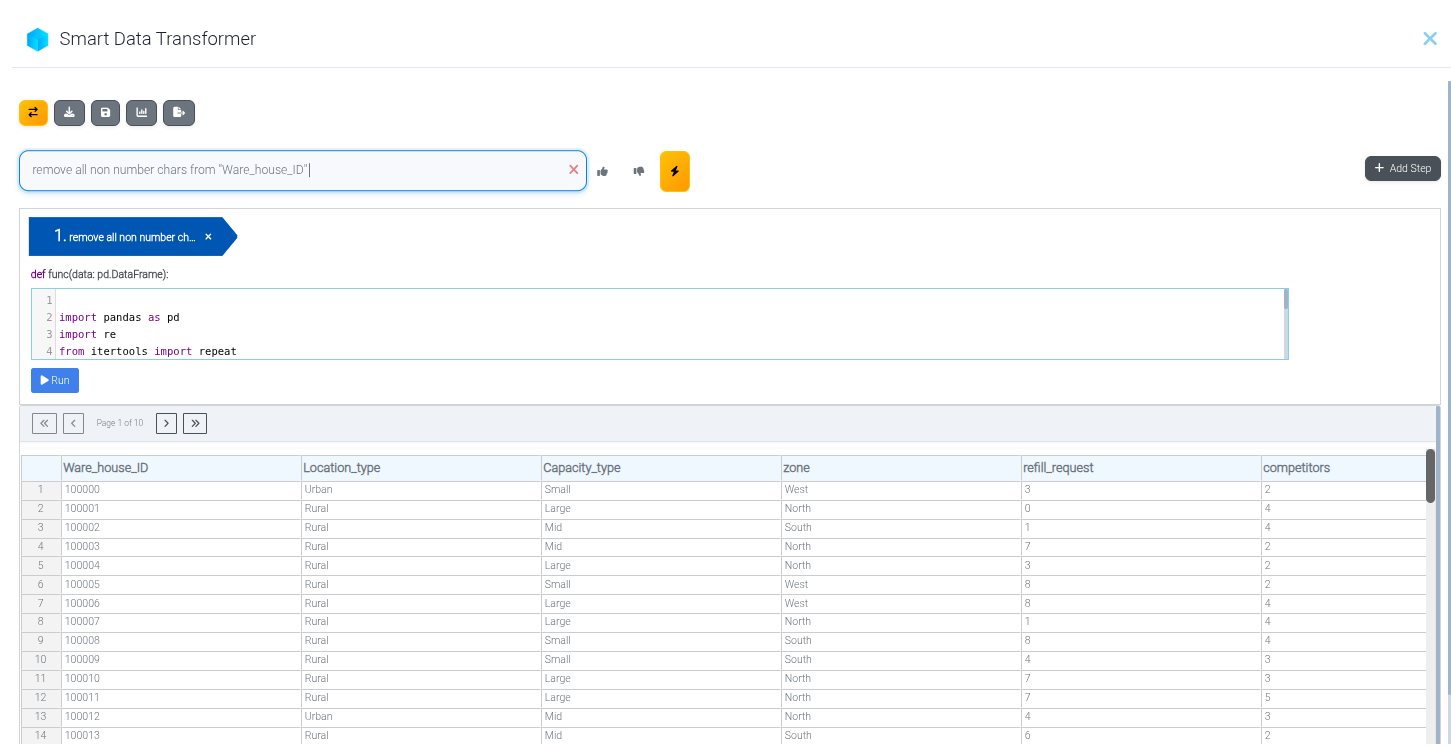
5. Add Your First Transformation Step
In the search bar, write your first prompt and press Enter:
remove all non number chars from "Ware_house_ID"
Press Enter and you'll see the data being transformed in real-time.
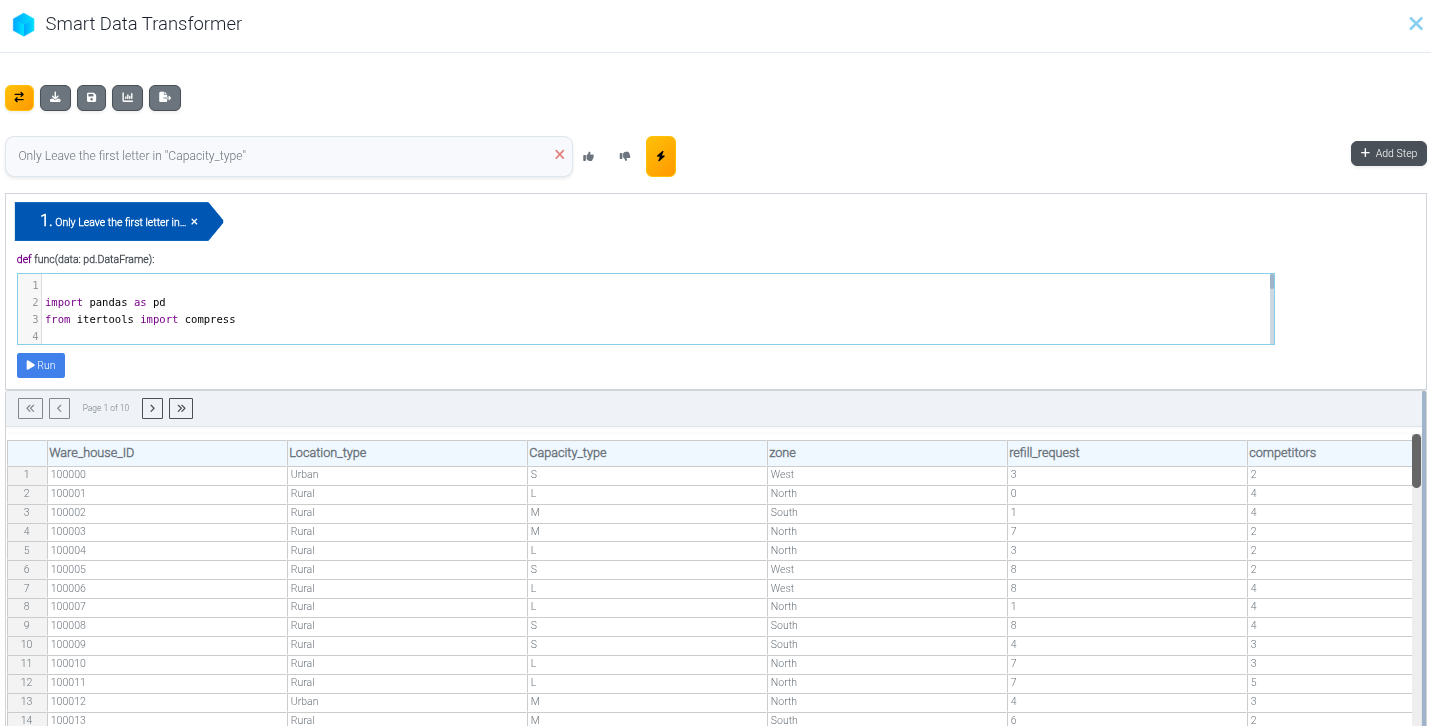
6. Add a Second Transformation Step
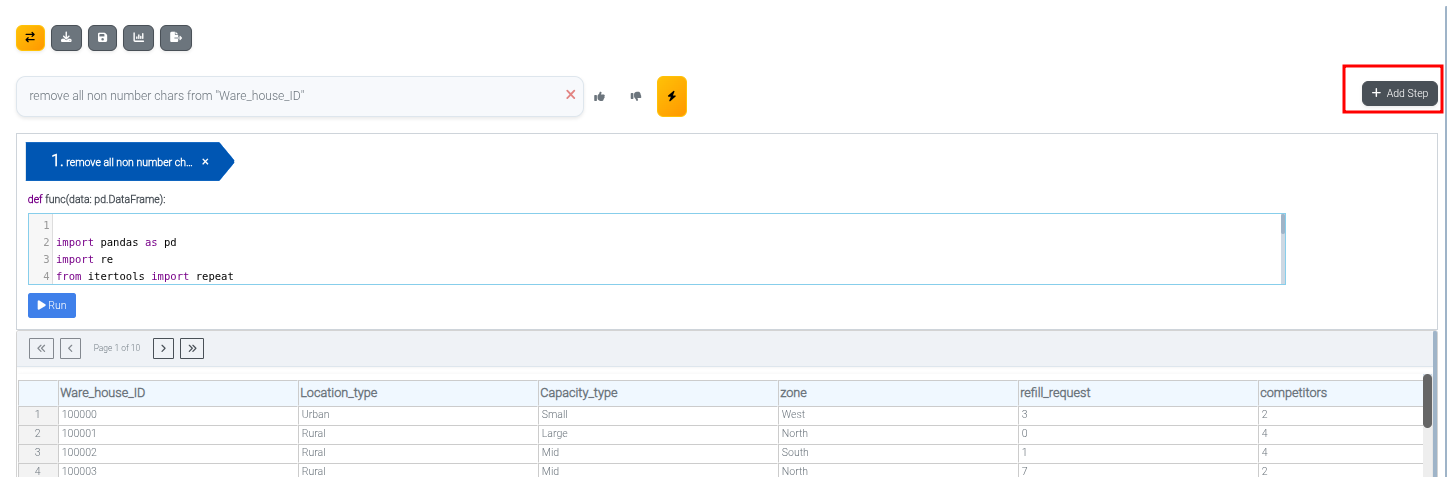
Click the "Add Step" button on the right-hand side to create a new tab. This creates a second step in your pipeline.
In the new tab, write another prompt to add the next step:
Only Leave the first letter in "Capacity_type"
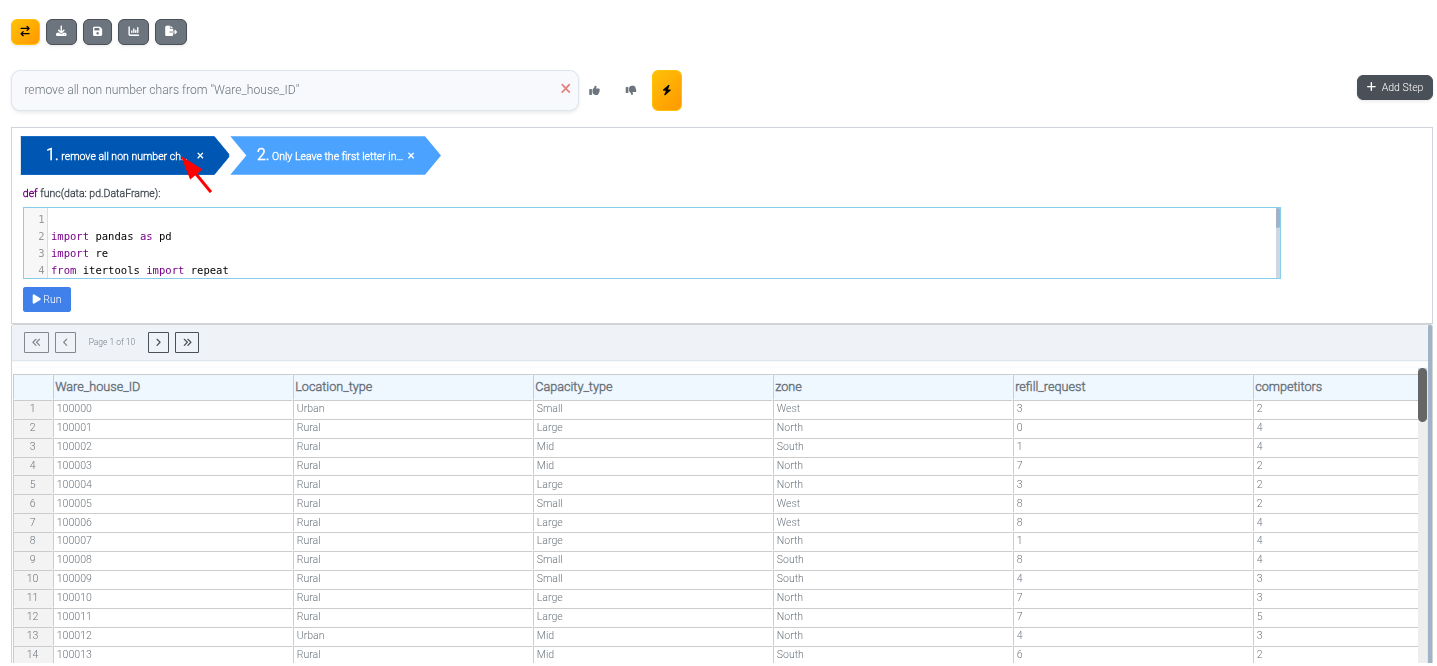
7. Navigate and Review Your Pipeline
You can now navigate between pipeline steps:
- Click on different tabs to view intermediate pipeline results
- Each tab shows the data state at that specific step
- This helps you verify that each transformation works correctly
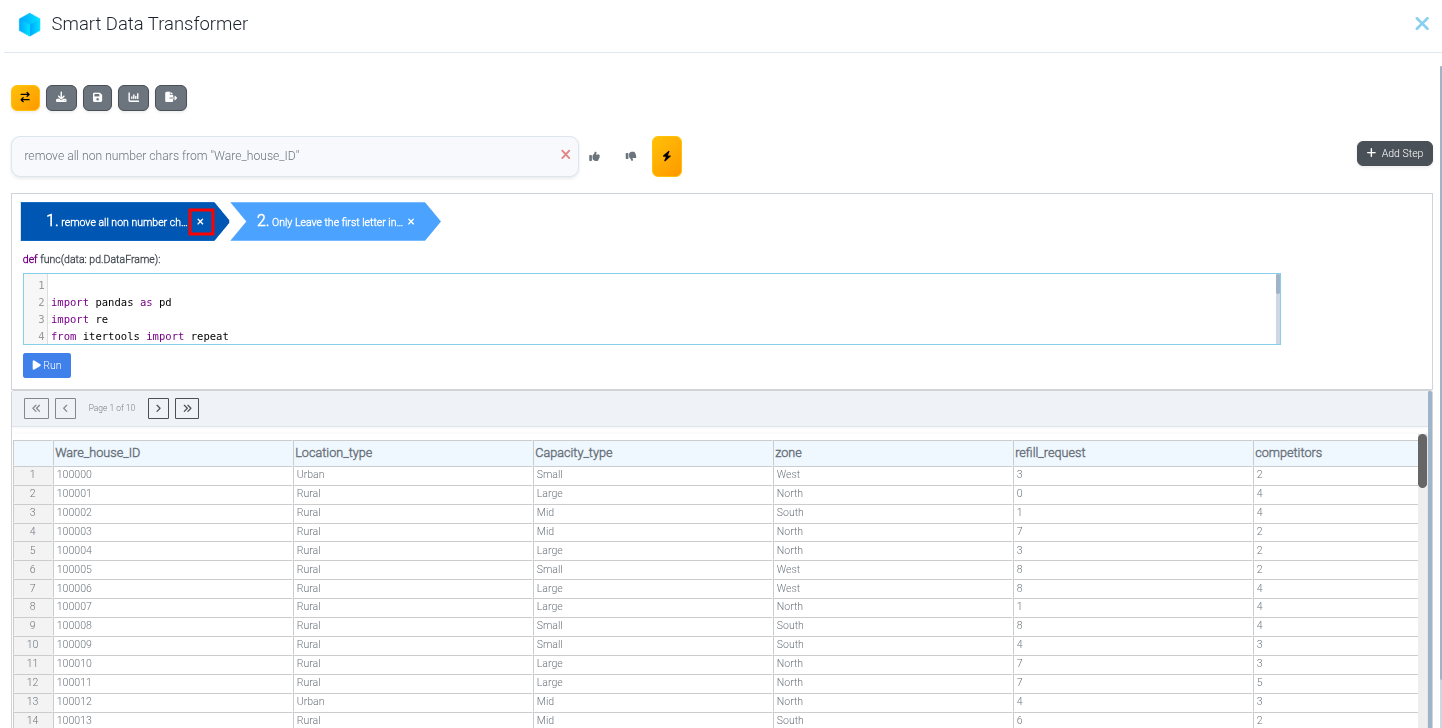
8. Manage Pipeline Steps
Remove unnecessary steps by clicking the 'X' button in each tab to delete that specific step from your pipeline.
9. Save the Transformation
Don't forget to press the "Replace the original datatable" button at the top to save your transformation.
Visual Guide
Step 1: Open Data Transformer
Step 2: First Transformation Step
Step 3: Add Second Step
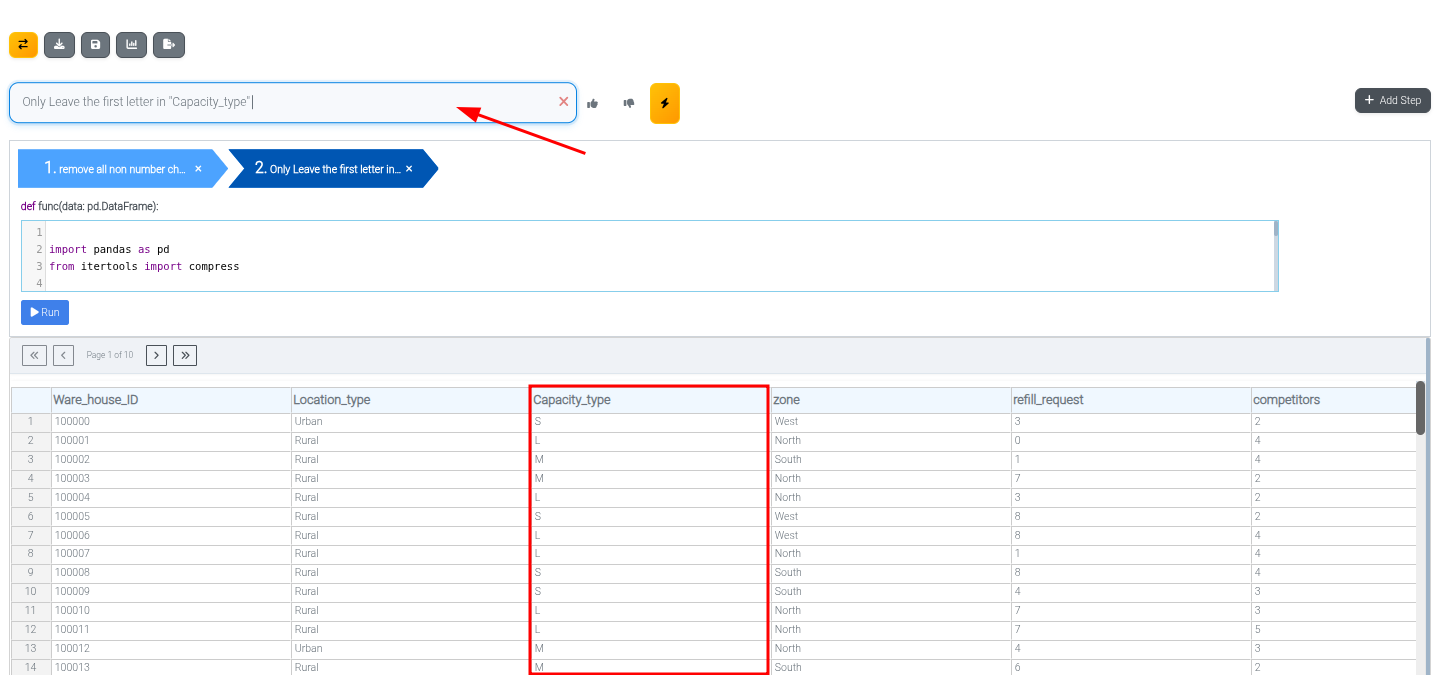
Step 4: Review Pipeline Tabs
Step 5: Delete Pipeline Step
Key Concepts
- Data Pipeline - A series of transformation steps applied sequentially to your data
- Natural Language Commands - Describe transformations in plain language
- Multi-Step Processing - Chain multiple transformations together
- Real-Time Preview - See results immediately as you add steps
Summary
You've successfully learned how to:
✓ Create a new project for data transformation
✓ Import datasets into LOGIBLOX
✓ Access the AI Data Transformer
✓ Write natural language transformation commands
✓ Build multi-step data pipelines
✓ Save transformed data